Concrete Removal Cost: What Drives the Price
Concrete removal is quoted from the actual scope, but the price always comes down to the same handful of factors. Here is what they are and how to get an accurate number.
Concrete removal is quoted from the actual scope, but the price always comes down to the same handful of factors. Here is what they are and how to get an accurate number.
Consumer cost guides published in 2026 put basic slab removal at roughly $2 to $6 per square foot nationally, with unreinforced residential flatwork at the low end and reinforced or thicker slabs at the high end. Some guides list higher figures once disposal, rebar and site restoration are included.
Those numbers are mostly for driveways, patios and residential slabs. Commercial and industrial removal varies more, because slabs are thicker, more heavily reinforced and often inside buildings. Treat any per-square-foot figure as a starting point, not a quote.
A 4-inch unreinforced patio and a 10-inch warehouse slab with two mats of rebar are different jobs. Thickness and reinforcement drive the breaking time, the size of the equipment, and the weight that has to be hauled.
Open exterior sites allow excavators with hydraulic breakers and direct truck loading. Interior work, tight side yards, upper floors and occupied buildings may need smaller equipment, saw cutting into liftable pieces, or hand breaking, all of which take longer.
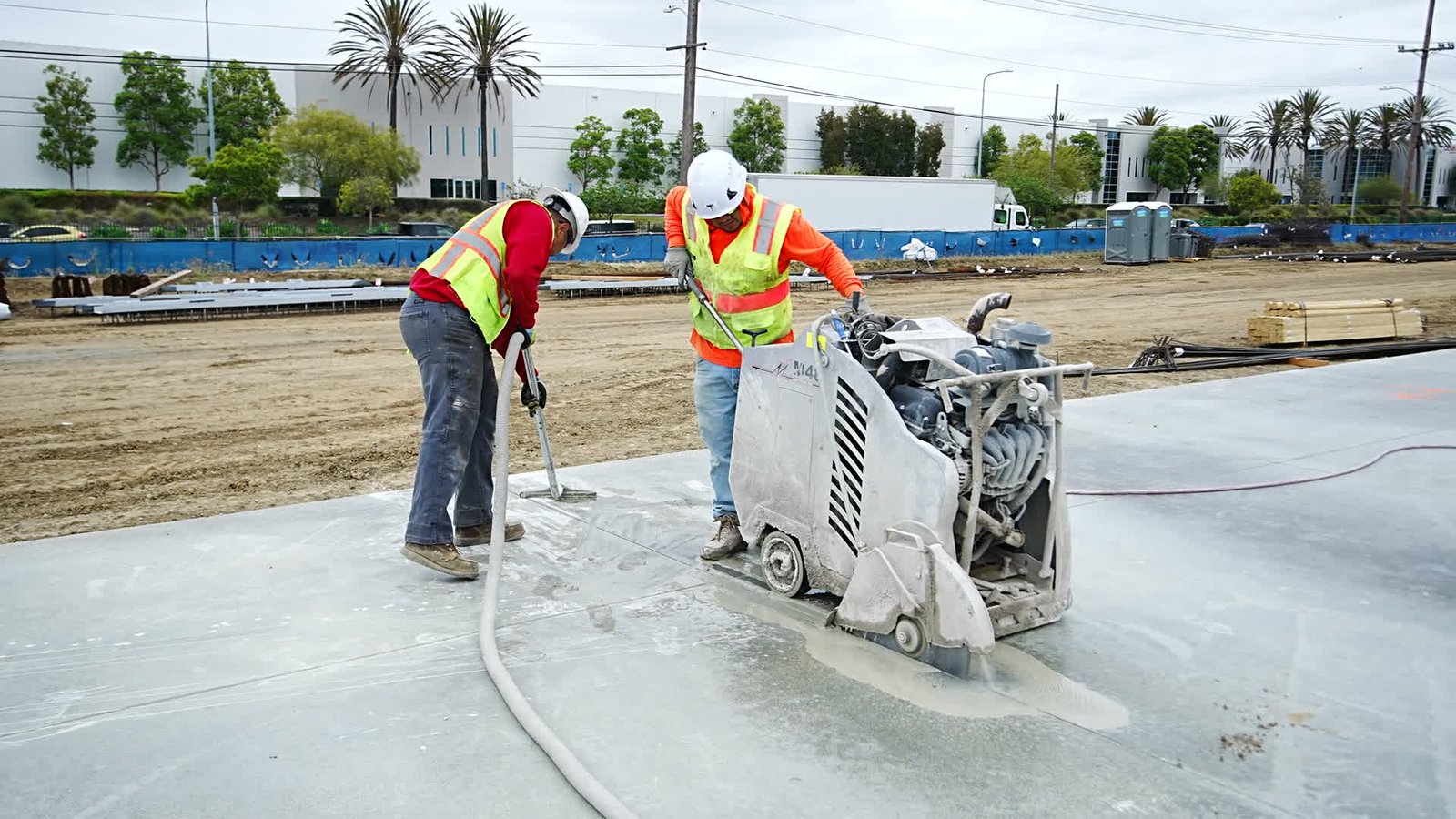
When part of a slab stays, the removal area is saw cut first so the remaining edge is clean and undamaged. That adds cost but saves repair work later.
Concrete is heavy: roughly 150 pounds per cubic foot, so a 4-inch slab weighs about 50 pounds per square foot. Truck loads, distance to the recycling facility and dump fees are a real part of the price. Clean concrete is usually accepted at recyclers for less than mixed debris.
Buried utilities, post-tension tendons, radiant lines and contaminated soil all change the approach. Scanning and utility locates (call 811) come before breaking.
Night or weekend work, phased removal around active operations, dust and noise limits, and prevailing-wage public works requirements all affect labor cost.
These assume normal-weight concrete at about 150 pounds per cubic foot and are useful for estimating truck loads. Broken concrete takes more volume than solid concrete, so plan bins and trucks on weight limits, not just cubic yards.
When the scope is clear (area, thickness, access, haul-off), a fixed price is common. When conditions are unknown, such as buried footings, unknown thickness, or work around operations, time-and-material can be fairer for both sides. DSI quotes either way; see fixed-price or hourly.
DSI breaks, removes and hauls concrete with its own breakers, excavators, Super 10 dump trucks and roll-off bins, and hauls to recycling facilities wherever possible. We work from Riverside across Southern California and on larger projects statewide. Call (951) 737-2077 or send your scope.
Published by Demolition Specialist Inc., Riverside, CA (Lic. #936886), October 2026. General information, not engineering or legal advice; confirm requirements with your engineer, building department and air district.
Call or submit your scope — we respond within one business day.