The Usual Sequence
- Asbestos survey of the structure by a qualified, certified consultant.
- Abatement of any regulated asbestos and other hazardous materials found.
- Air district notification of the demolition (in the South Coast AQMD, under Rule 1403).
- Demolition permit from the city or county building department.
- Utility disconnects and capping, plus 811 utility locates for site work.
- Demolition, separation of materials and haul-off.
Each jurisdiction has its own forms and order of operations, so check with the local building department early. The pieces below apply almost everywhere in the state.
Asbestos Surveys
Asbestos can be in flooring, mastic, drywall joint compound, acoustic ceilings, roofing, pipe insulation and stucco, including in buildings newer than many people expect. In the South Coast AQMD, Rule 1403 requires an asbestos survey before demolition or renovation regardless of the building's age, and building departments in the district generally expect the survey to be signed by a Certified Asbestos Consultant.
If the survey finds regulated asbestos-containing material, it has to be removed by a licensed abatement contractor before demolition. That work is separate from the demolition contract, and the demolition crew should have the survey and abatement clearance before starting.
SCAQMD Rule 1403 Notification
Rule 1403 is the South Coast Air Quality Management District's asbestos rule for demolition and renovation. The South Coast AQMD covers Orange County and the urban parts of Los Angeles, Riverside and San Bernardino Counties, which includes most of the Inland Empire.
- Notification is required for demolition even when the survey finds no asbestos.
- The notice and fee are due at least 10 working days before work starts, and the clock begins when a complete notification is received and paid.
- Shorter periods may apply to emergency demolition. Confirm against the current rule text.
- Renovations that disturb asbestos above the rule's thresholds also need notification.
California Health and Safety Code section 19827.5 ties this to the building permit: local agencies generally won't issue a demolition permit until the applicant shows the air district notification has been made. Build those 10 working days into the schedule.
Outside the South Coast AQMD
Other parts of the state have their own air districts with their own asbestos and notification rules. The High Desert, including Victorville, Hesperia and Barstow, is mostly under the Mojave Desert AQMD. The Coachella Valley is within the South Coast AQMD. The Central Valley falls under the San Joaquin Valley APCD, and Northern California projects fall under districts such as Sacramento Metropolitan AQMD and the Bay Area AQMD. The pattern is similar: survey, abate, notify, then demolish.
Demolition Permits
Most cities and counties require a demolition permit for removing a building or structure, and many require one for significant interior or partial demolition. Applications typically ask for a site plan, proof of the air district notification, utility disconnect confirmations, and sometimes erosion control, a construction waste recycling plan under CALGreen, or historic review for older buildings.
Permit fees and review times vary by city. Allow for them at the start, especially when the permit depends on the air district's 10 working days.
Cal/OSHA Requirements
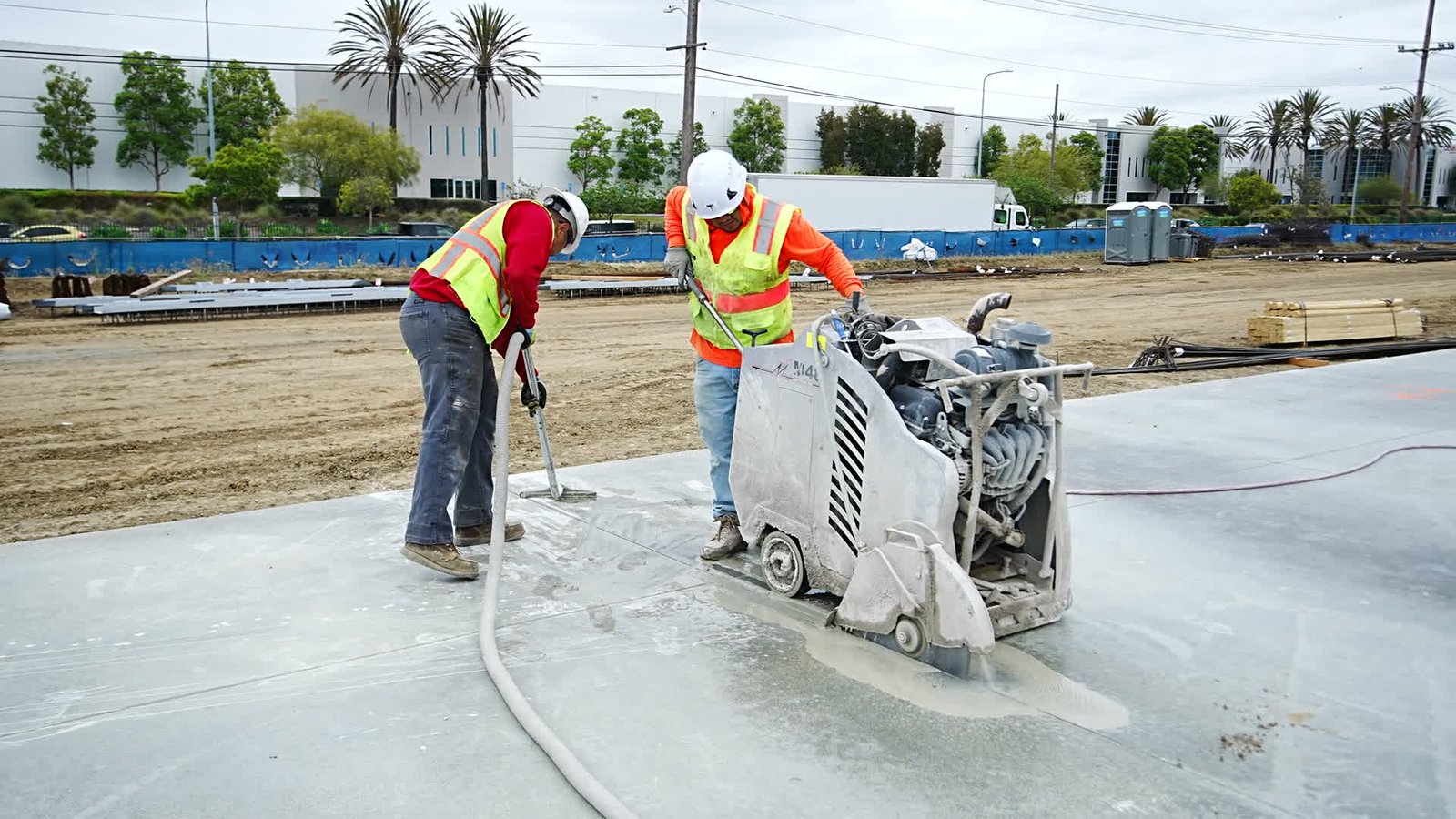
Cal/OSHA requires a permit for demolition of buildings or structures more than 36 feet high, and the demolition contractor must follow Title 8 rules on demolition, fall protection, silica and engineering surveys of the structure before work starts. Saw cutting, coring and breaking concrete fall under Cal/OSHA's respirable crystalline silica standard, which is why that work is done wet.
How DSI Fits In
DSI works from the GC's or owner's permit set and coordinates with the abatement contractor and inspectors, so demolition starts on time once the paperwork clears. We are a licensed California contractor (Lic. #936886) and DIR-registered (#1000002162) for public works. See our building demolition and site demolition services.
Published by Demolition Specialist Inc., Riverside, CA (Lic. #936886), October 2026. General information, not engineering or legal advice; confirm requirements with your engineer, building department and air district.