Cutting or Coring a Post-Tension Slab
Post-tensioned concrete is everywhere in California parking structures, podium buildings, office floors and slab-on-grade homes. Before anyone saws or drills into it, the tendons have to be found.
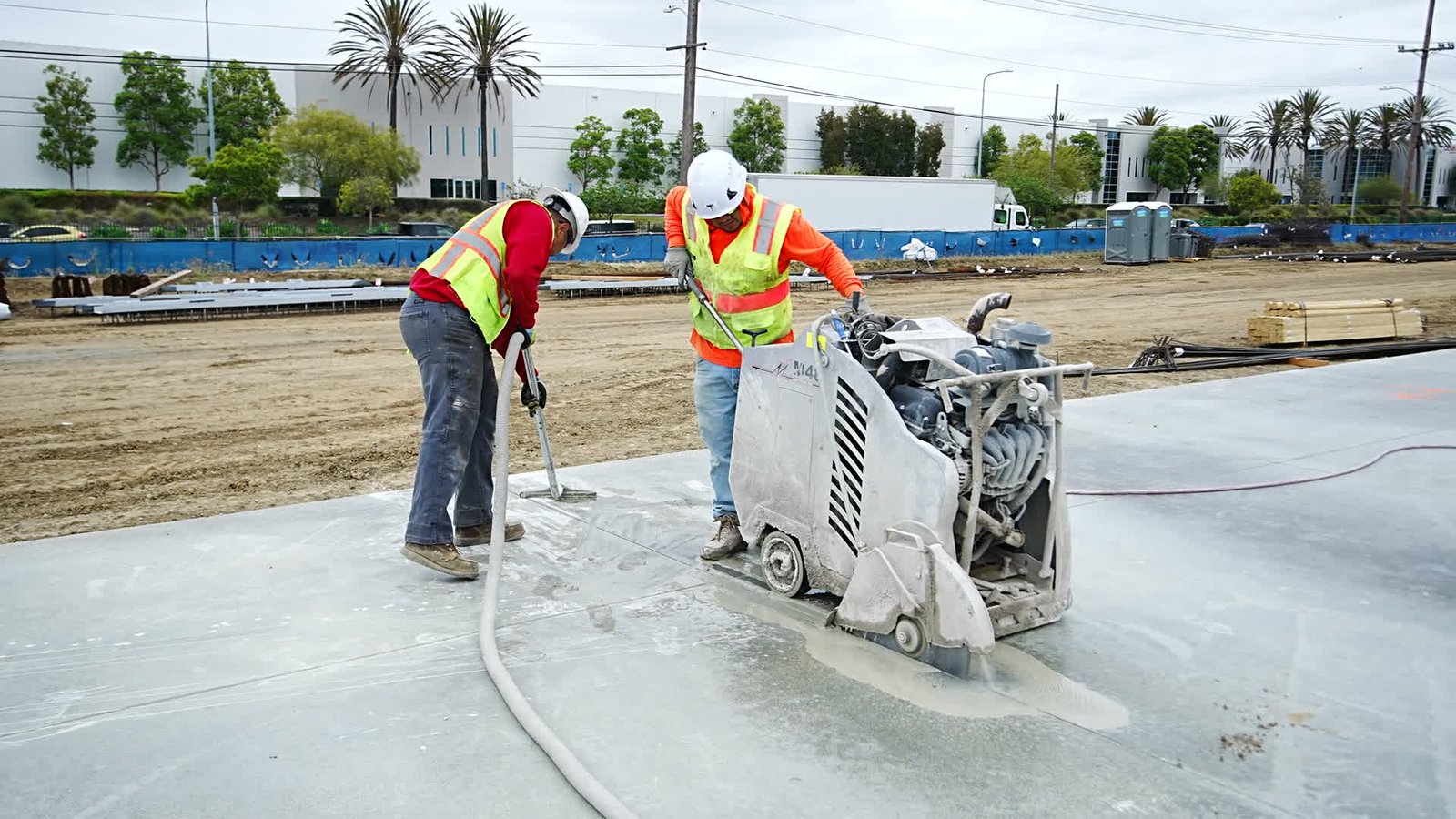
Post-tensioned concrete is everywhere in California parking structures, podium buildings, office floors and slab-on-grade homes. Before anyone saws or drills into it, the tendons have to be found.
A post-tension (PT) slab is reinforced with high-strength steel tendons that are stretched after the concrete cures. The tension squeezes the concrete together, which lets designers build thinner slabs and longer spans than ordinary rebar allows. That is why PT shows up in parking garages, multi-story podium buildings, elevated decks and many slab-on-grade foundations on expansive soils.
Most building slabs in California use unbonded single-strand tendons: a seven-wire steel strand, usually about half an inch in diameter, coated in grease and sheathed in plastic, anchored at each edge of the slab. Each tendon is typically stressed to around 33,000 pounds of force and stays under that load for the life of the building.
Cutting into a stressed tendon releases that stored energy at once. A cut tendon can whip, blow out of the slab edge or the face of the concrete, and seriously injure anyone nearby. It also removes part of the slab's structural capacity, so the floor may need an engineered repair before it can carry its design load again.
This is why many PT buildings have a stamp or sign that reads "post-tensioned slab, do not cut or core" and why owners and engineers usually require scanning and approval before any penetration.
Ground-penetrating radar (GPR) sends a radio pulse into the concrete and reads the reflections from embedded objects. Steel tendons, rebar, conduit and voids each show up as reflections at a measurable depth, so a trained technician can map them in real time and mark them directly on the surface.
Tendons are not laid flat. They are draped: high in the slab over beams and supports, low near mid-span. A scan therefore marks both the location and the approximate depth of each tendon, which tells the cutting crew whether a shallow cut is clear or a full-depth core has to move.
Small penetrations for plumbing, electrical and sprinkler lines are usually cored, because a core can be moved a few inches to sit between tendons. Larger openings, such as stairs, shafts or new pits, generally cut through tendons by design, and those need an engineered plan for de-tensioning, cutting and re-anchoring the affected tendons before any saw touches the slab.
If your scope includes a new opening in a PT slab, involve the structural engineer early. The cutting contractor can then follow an approved sequence instead of discovering the problem in the field.
GPR is very good at locating steel in normal structural concrete, but it is not an X-ray. Very dense reinforcement can hide what is underneath it, a tendon tucked directly under rebar can be hard to separate, and fresh or wet concrete reduces depth. A good technician tells you what the scan could and could not see, so cutting decisions are made on honest information.
DSI scans with GPR before cutting or coring any slab where tendons, rebar or conduit are not confirmed, and we adjust locations around what the scan finds. Our crews then core drill, flat saw or wall saw inside the marked layout. We work from Riverside across Southern California and mobilize for projects across California.
Published by Demolition Specialist Inc., Riverside, CA (Lic. #936886), October 2026. General information, not engineering or legal advice; confirm requirements with your engineer, building department and air district.
Call or submit your scope — we respond within one business day.