Concrete Core Drilling Explained
Core drilling is how contractors put clean, round holes through concrete slabs, walls and decks for pipe, conduit, ductwork and anchors, without breaking out more concrete than the hole needs.
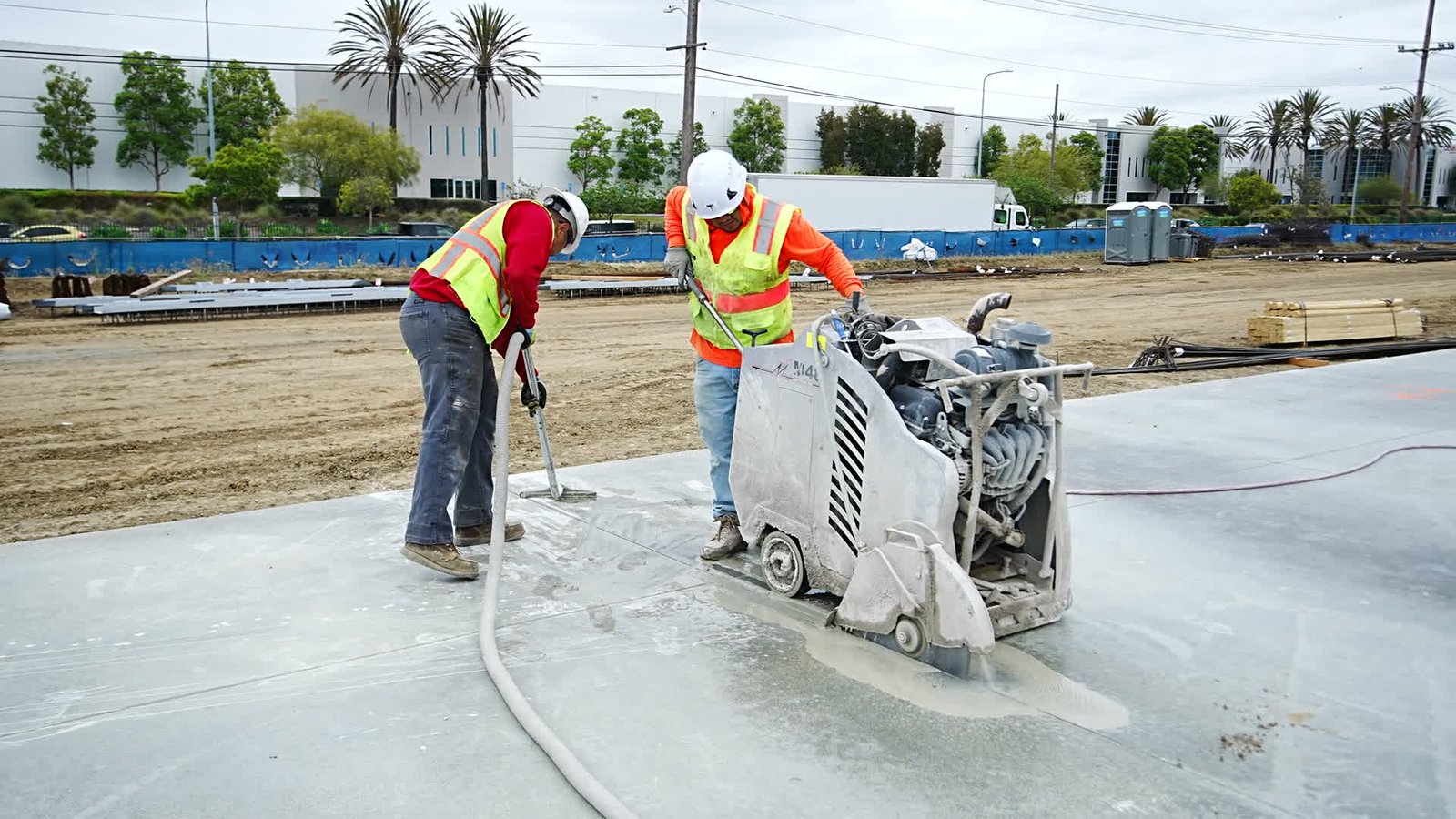
Core drilling is how contractors put clean, round holes through concrete slabs, walls and decks for pipe, conduit, ductwork and anchors, without breaking out more concrete than the hole needs.
A core drill uses a hollow steel bit with diamond segments on its cutting edge. The bit spins and grinds a ring through the concrete, and the solid cylinder in the middle, the core, comes out in one piece. Because only a thin ring is removed, the hole is precise, the surrounding concrete is not shattered, and reinforcing steel is cut cleanly instead of being torn.
Professional rigs are mounted on a stand, anchored or vacuum-held to the surface, and fed with water to cool the bit and control dust. That setup lets the operator drill straight and to depth in floors, walls and ceilings.
Core bits range from small diameters for anchors and conduit up to large bits for pipe, ductwork and drains. The size the job needs comes from the trade's hole schedule, and depth comes from the slab or wall thickness. Rigs can drill vertically through floors, horizontally through walls, at an angle, and overhead into decks and beams.
Overhead coring and very deep holes take more setup time, because the rig has to be anchored securely and water has to be captured. That is one reason the same hole can cost more in one location than another.
For any penetration larger than a small anchor, or anywhere rebar or finished surfaces are involved, coring is usually the right method.
Before coring an elevated deck, a post-tension slab or any wall or slab where conduit locations are unknown, scan with GPR. A core through a live conduit or a post-tension tendon is far more expensive than the scan. See our guide to cutting or coring a post-tension slab.
Contractors usually quote per hole, by diameter and depth, or as a lump sum for a full hole schedule. Sending the schedule and drawings gets the most accurate number. Because a large part of a small job is mobilization, grouping holes into one visit costs less than calling a crew out for each trade.
Coring concrete creates respirable crystalline silica, so Cal/OSHA's silica standard applies. Wet drilling with water delivered to the bit is the standard control, and the slurry has to be contained and cleaned up so it doesn't reach drains or finishes it shouldn't. Rigs must be anchored correctly, and work below has to be protected when coring through an elevated slab.
DSI's crews core drill wet with diamond bits in slabs, walls and decks for GCs, plumbers, electricians and fire-sprinkler contractors. We scan when locations aren't confirmed and clean up the slurry before we leave. See our core drilling service, or call (951) 737-2077 with your hole schedule.
Published by Demolition Specialist Inc., Riverside, CA (Lic. #936886), October 2026. General information, not engineering or legal advice; confirm requirements with your engineer, building department and air district.
Call or submit your scope — we respond within one business day.