Flat Sawing vs. Wall Sawing vs. Wire Sawing
Concrete cutting isn't one tool. The method depends on whether the concrete is horizontal or vertical, how thick it is, and how much room there is to work.
Concrete cutting isn't one tool. The method depends on whether the concrete is horizontal or vertical, how thick it is, and how much room there is to work.
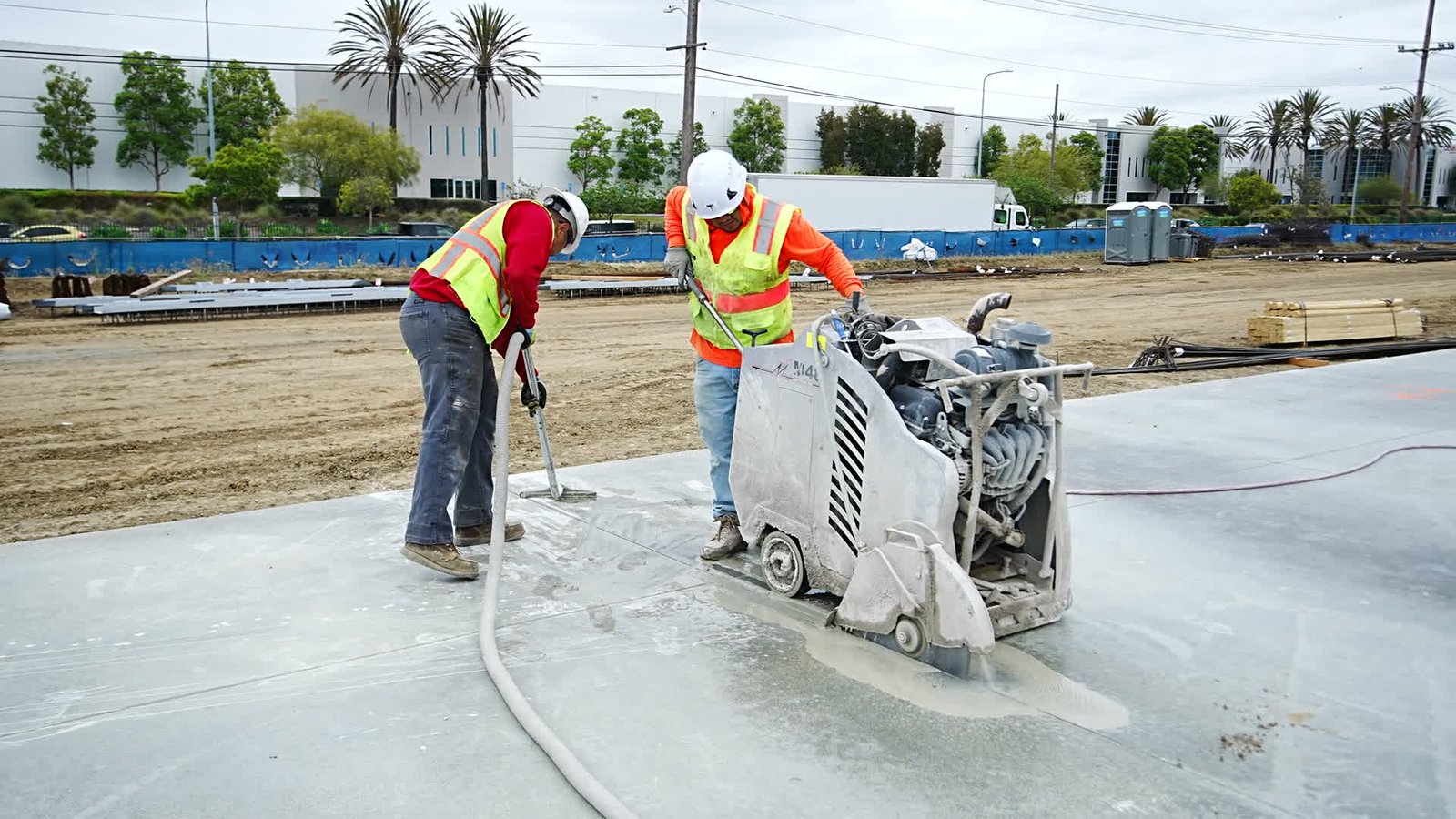
Flat saws are walk-behind or ride-on machines with a large diamond blade that cuts horizontal surfaces: floors, slabs on grade, elevated decks, sidewalks, driveways and pavement. They are the standard tool for plumbing and electrical trenches, removal areas, control joints and patch cut-outs.
See flat sawing.
A wall saw runs on a track bolted to the wall, slab or ceiling, with the blade on a powered head that travels along the track. Because it is mounted, it cuts precise, straight openings in vertical or overhead concrete: doors, windows, mechanical openings, and sections of walls or decks to be removed.
See wall sawing.
A wire saw pulls a diamond-beaded steel cable through the concrete in a loop, driven by pulleys. Because the wire can wrap around almost any shape, it cuts sections thicker than any blade can reach: massive foundations, bridge piers, dams, thick walls and heavily reinforced structures. It is a specialty method, usually chosen when nothing else can make the cut.
DSI's crews perform flat sawing, wall sawing and core drilling. If your project might need wire sawing, call us with the dimensions and we will tell you honestly which method fits.
Handheld saws, including chainsaw-style concrete saws and ring saws, finish the corners of wall-sawn openings, cut in tight spaces and make shallow cuts up to around a foot deep. They are flexible but slower and less precise than mounted saws on large openings.
When the hole is round, a core drill is the right tool. Rows of overlapping cores (stitch drilling) can also cut an opening where a saw can't reach. See concrete core drilling explained.
Whatever the method, scan first when embedded items aren't confirmed. See cutting or coring a post-tension slab.
Every one of these methods creates respirable crystalline silica dust. Cal/OSHA's silica standard makes water delivered to the blade or bit the standard control, which is why professional concrete cutting is done wet and why slurry containment and cleanup are part of the job.
DSI's operators flat saw, wall saw and core drill with our own equipment, and scan with GPR before cutting. We work across the Inland Empire and Southern California and mobilize for projects statewide. Call (951) 737-2077 or send your layout.
Published by Demolition Specialist Inc., Riverside, CA (Lic. #936886), October 2026. General information, not engineering or legal advice; confirm requirements with your engineer, building department and air district.
Call or submit your scope — we respond within one business day.